
Building an AI-Enabled Operating Model: Heard at SIFMA Ops 2026

July 09 2026 / 2 Minute Read
Artificial intelligence isn't just another technology investment—it requires a fundamental shift in how financial institutions operate. In...

Automated critical trading, clearing, servicing, and operational workflows to increase efficiency and control.


Simplify advisor workflows and account servicing to improve productivity and client experiences.
Simplify investor communications, proxy voting, and governance while strengthening shareholder engagement.
Streamline fund operations, data management, and oversight to improve efficiency, transparency, and control.

BetaNXT CEO Bob Santella notes that winning firms will not be defined by their AI tools, but rather by whether they have rebuilt their operating model to move faster, serve clients better, and scale without friction.
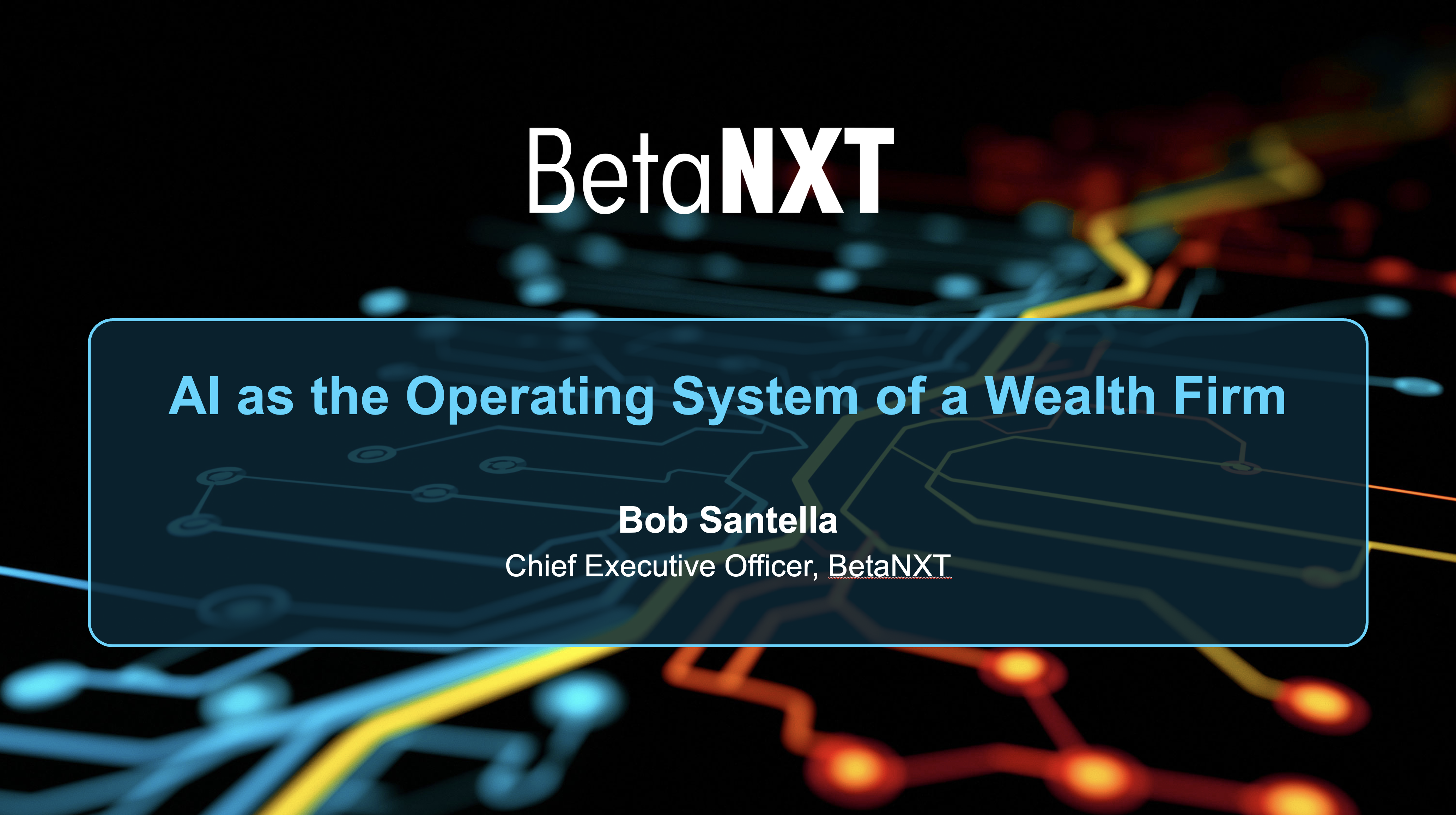
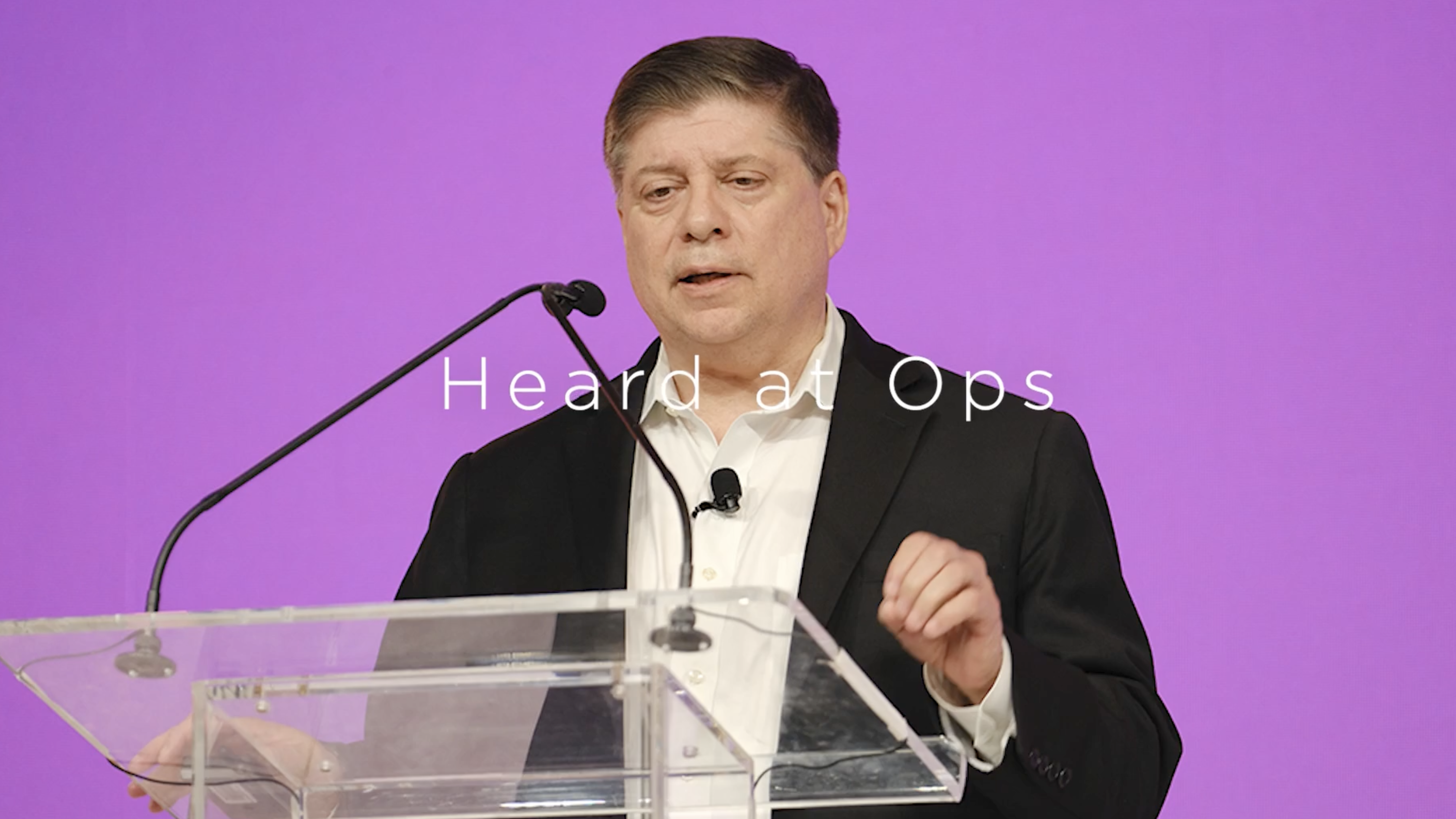
Good morning, everybody. I'm ecstatic to be here in sunny Southwest Florida, getting away from the New York and Chicago weather. It's good to see we have temperatures that go to the 80s and 90s once again. So I'm not going to talk about any regulatory aspect or anything of commission or what. I'm here to talk about a little topic called AI. It's a brief chat, lay the groundwork, but it's one of the topics that impacts our industry. I think probably one of the most meaningful ways that I've seen in my career, just because of the pace of how it's moving. I can say probably without exaggeration, it's a top priority for everybody in this room or one of the top priorities. If it's not, it probably should be. It's fair to say that almost every firm that we work for and others in the industry, they're investing more and more in AI.
The question is no longer does AI matter. The question is whether it's fundamentally changing the way we operate our companies. Hard to tell that depending on the day of the week. By making investments, hiring staff, engaging third party expert firms, that does not necessarily mean that it's changing fundamentally how we operate our businesses. It might make improvements in targeted areas, but it's not the seismic shift we're looking for. In many cases, the industry is treating AI like electricity plugged into 20 year old machinery. And then it's wondering why the gains are either incremental or missing the mark. In many cases, what we're seeing across the industry is a rush to layer AI onto legacy workflows, co-pilots on top of fragmented processes, automation on top of exception queues, chat interfaces on top of operational debt, on and on and on. The theme is new innovative on top of old. That leads to suboptimal outcomes and it's not the intent as far as having strategic direction for AI.
Firms that treat AI as an enhancement layer instead of an operational model shift will struggle to scale, govern risk, and compete on speed. We're also by and large as an industry treating governance in many cases as an afterthought, a secondary factor, a control layer to be considered after the fact. The next critical phase is not about smarter models in my view. It's about re-architecting operations for intelligence-first execution. It's about adopting AI as a default operating system of a wealth firm.
So what do we mean when we define AI as an operating system? So an AI operating system is not just another application sitting besides your existing stack. It becomes the orchestration layer for how the enterprise should function. An effective and successful strategy of deploying AI results in a fundamental re-architecture of an enterprise's culture and way of doing things. It changes how work enters the organization, how decisions get made, how risk is identified, and how exceptions are resolved. I have one line at the bottom here, which if there's any takeaway in this slide, it's this line right here. Traditional workflows repeat. AI-native workflows learn. Again, the emphasis on the word learn, intelligence. Traditional workflows repeat AI-native workflows learn.
So embedding AI into the operating logic of an enterprise, what does it do? Well, it allows for instant resolution, consistent risk management, and a capacity to maximize people-resources by prioritizing edge cases over volume. In other words: scalability. In a traditional model, humans in many cases spend enormous amounts of time reviewing, routing, reconciling, and escalating work. All critical and necessary steps for time consuming. In the AI native model, intelligence handles the routine flow instantly and humans engage where judgment, nuance, and accountability matters most. This in no way is about removing humans from operations. On the contrary, it's about moving human expertise and human experience higher up in the value chain when it comes to a successful strategic AI strategy. One thing is clear, again, the line of the slide here, the queue is not getting smaller. It's going away. When you think about your experience as operational leaders and business leaders, and trying to reduce the amount of time, customer support, trade reconciliations, triaging trades, the queue is actually going to go away at some point and become instantaneous, not just get smaller.
Now, almost everything we do in the industry, governance is such an important factor and a consideration. At scale, AI will only work effectively if governance is embedded from the beginning. In our industry, trust, auditability and regulatory accountability are non-negotiable. Something we live with every day in this industry. Historically, governance has been reactive in many cases. Data lineage was constructed after the fact. Audit trails in many cases are manual and compliance checks are set outside the major workflows. In an AI-native model, governance becomes continuous. It's embedded directly into ingestion, decisioning, and execution. What are the outcomes? Far fewer errors, significantly better transparency, and less time spent on audit processes. Sounds like a winning formula to me. The firms that scale AI successfully will be the firms that can prove consistency, explainability, and control to the regulators.
So, to sum up my brief remarks here and intro remarks on AI, what does this all mean? How do we pull it together in a few minutes, to the extent that we can? One thing I would ask for all of us during the rest of the conference and when we leave the conference is: we should think about how AI is fundamentally impacting our day-to-day routines, our processes, and our decision making. Are you satisfied with where you stand? If AI truly becomes the operating system, an organization ops team needs to pivot from processing the work to supervising the systems that do the work. My own view, this is a really exciting time to develop different skills, explore new ways to maximize our organizations and establish new relationships with technology.
For decades, operations have been viewed primarily by the companies that deploy these teams as infrastructure. Yeah, it's necessary, but it's also expensive, often viewed as a cost center. In the AI era, operations become a strategic intelligence layer for the enterprise. The firms that thrive in the next decade will not simply deploy AI—they will operate through it. The future is not human vs. AI, or even simply human-in-the-loop. The future is human intelligence amplified by the systems that learn, adapt, and execute at scale. So, that's the end of my closing remarks. I want to thank SIFMA for allowing me to give these remarks. They did a great job again of a fun filled agenda and venue, and I'm excited that in a few minutes, we'll get a chance to meet the panel headed up by Chris Nobles, my colleague at BetaNXT. Have a great rest of the day, everybody.
Source: SIFMA Ops 2026
July 09 2026 / 2 Minute Read
Artificial intelligence isn't just another technology investment—it requires a fundamental shift in how financial institutions operate. In...
May 06 2025 / 25 Minute Read
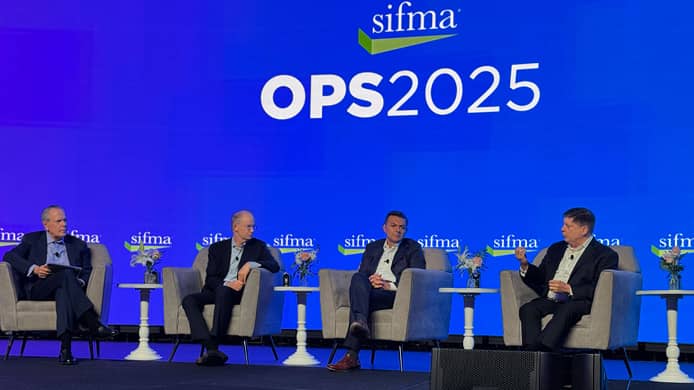
SIFMA President and CEO, Kenneth E. Bentsen Jr., sits down with Bob Santella, CEO of BetaNXT to explore the themes shaping global markets...
May 21 2026 / 24 Minute Read
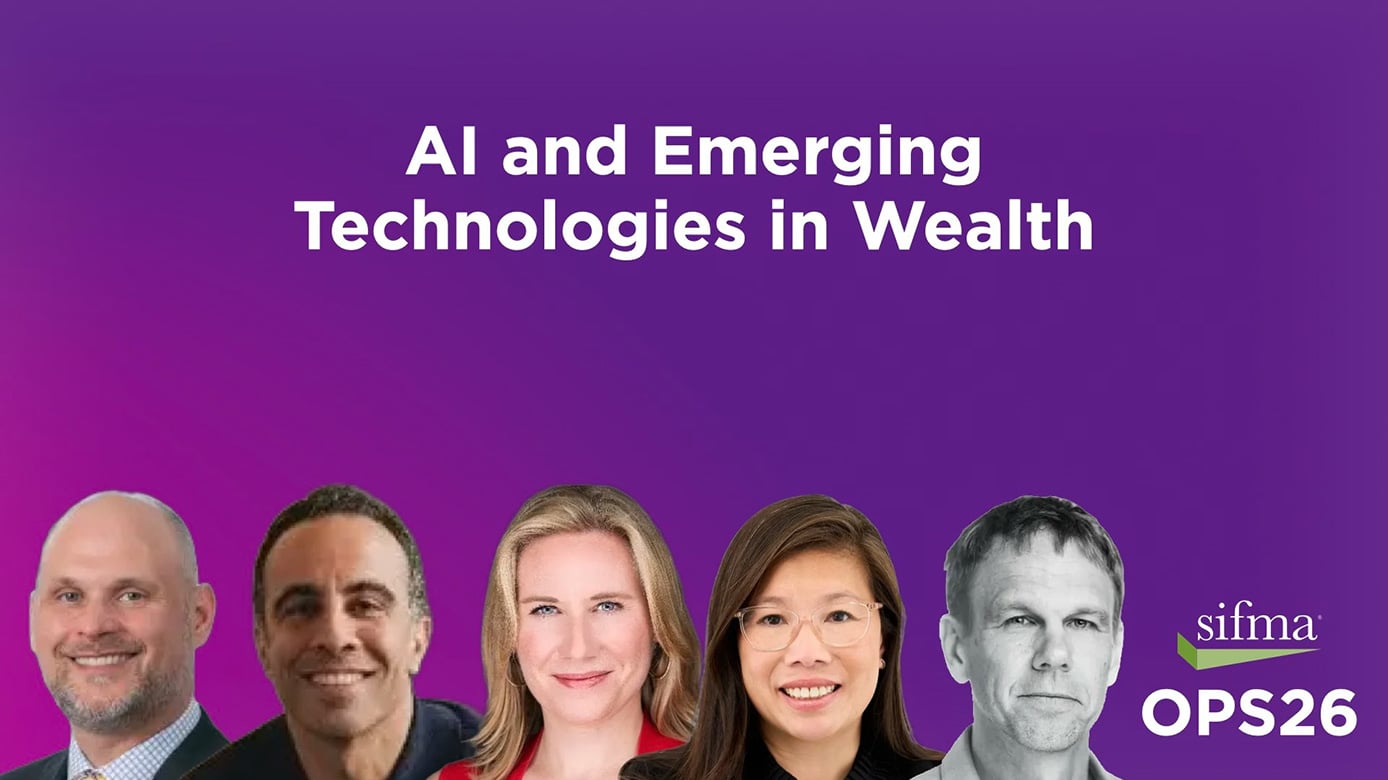
Chris Nobles leads senior industry executives in a discussion of where AI is producing measurable results in wealth management today and how...
